
Driving Sustainable Living Through Engagement
Using Gamification in a Tenant Mobile App
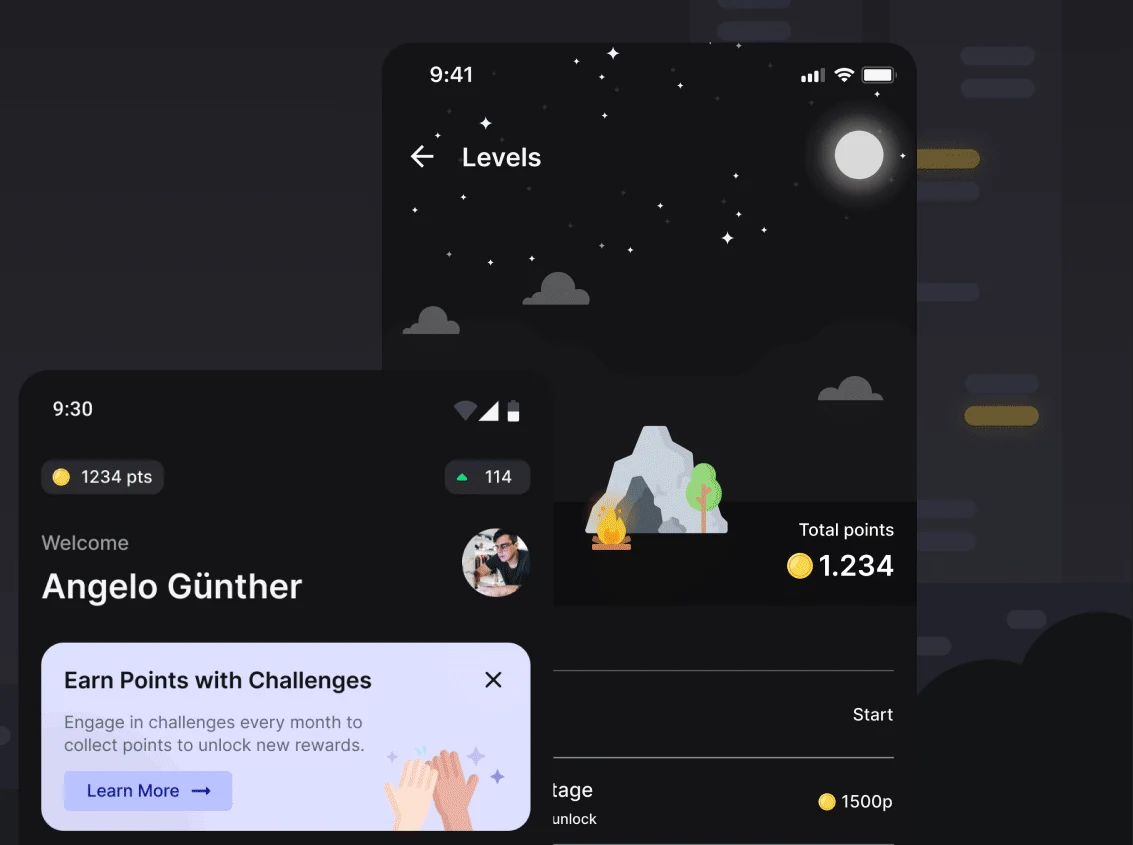
At a glance
Context
Resi, a tenant mobile app for residential property management. The question: how do you keep tenants engaged beyond paying rent and logging repairs?
The problem
35% of new users dropped off in week one and 70% never went beyond rent payments and maintenance requests, so the app did little for community or for saving energy.
What I did
I interviewed 30 tenants, surveyed users and analysed a three-month cohort, segmented tenants with the HEXAD framework, then designed levels, badges, streaks, challenges and rewards, and tested prototypes and A/B flows.
+42%
7-day engagement (target was 25%)
+58%
participation in community challenges
−9%
utility consumption across the property
3.4×
customer ROI, up from 2.4×
The journey, in the order it happened
- 1
Discover
- 2
Define
- 3
Design
- 4
Launch
- 5
Results
- 6
Next
The Resi tenant app reduces 9% utility cost for properties
A study conducted* by Hasso Plattner Institut in Potsdam found that the app is effective in reducing energy consumption for properties by 9%.
* Full research paper to be published in Dec, 2024.

01Introduction
Introduction
In the traditionally conservative real estate sector, gamification presented a strategic opportunity for digital innovation. Our tenant app integration of gamification elements aimed to address a persistent challenge: while users would download the app for essential tasks, sustained engagement remained elusive. Our focus centered on improving the 7-day engagement rate to foster deeper tenant connections.
The Challenge
Low engagement rates directly impacted the app's effectiveness in driving community involvement and energy-saving behaviors, consequently affecting landlord profitability. Enhancing the 7-day engagement rate became crucial for improving these metrics and ensuring continued user engagement.
Our Approach
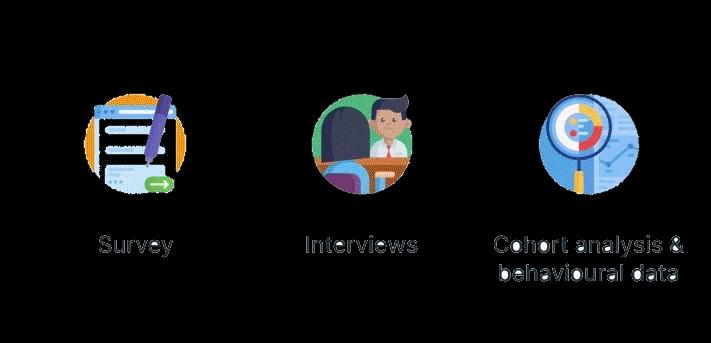
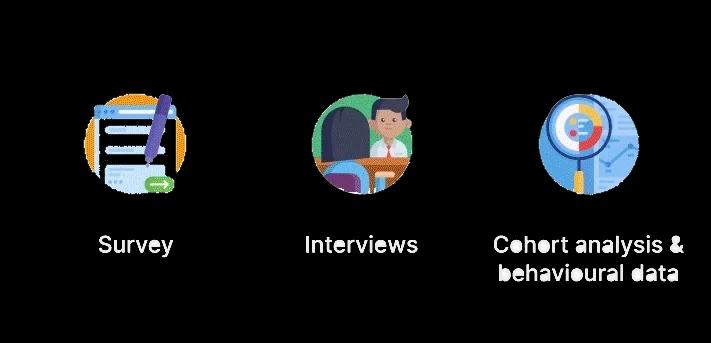
We began by collecting comprehensive data through user interviews, surveys, and cohort analysis to identify critical engagement patterns and their underlying causes. Our investigation combined behavioral metrics, session analysis, and user feedback to pinpoint where and why users were disengaging from the app. By analyzing these multiple data sources, we aimed to uncover specific pain points in the user experience and identify opportunities to enhance engagement through targeted improvements.
02Problem Analysis
Understanding User Engagement Challenges
To gain a comprehensive understanding of our engagement challenge, we implemented a multi-faceted research approach. Our investigation combined quantitative and qualitative methods to uncover not just what was happening, but why it was happening. First, we conducted in-depth interviews with 30 users across 4 properties with varying demographics of age, gender, occupation, etc., seeking to understand their app usage patterns and pain points. These conversations revealed valuable insights into user expectations and frustrations.
We then supplemented these qualitative findings with extensive survey data, reaching out to both active and dormant users. This helped us quantify the issues and identify common patterns across our user base.
We dove deep into cohort analysis, examining user behaviour patterns for 3 months (Apr-Jun 2023). They tracked key metrics like session length, feature usage, and retention rates to identify critical drop-off points in the user journey.
Finally, we analysed behavioural data metrics, looking at how users interacted with different features, which paths they took through the app, and where they encountered friction. This gave us a clear picture of the user experience in action.
03User Engagement Analysis
Results of User Engagement Analysis
Our analysis revealed several critical findings that were impacting user engagement:
01
Early User Attrition
02
Limited User Interaction
03
Community Disconnect
04
Declining Engagement Patterns
05
Missed Re-engagement Opportunities
06
Personalisation Gap
Defining Key Issues and Prioritizing
After the finding our Root Cause Analysis, we sat as a team to prioritise the pain points, while discussing possible solutions to address these pain points.
Based on this root cause analysis, we focused on integrating gamification elements that would create intrinsic motivation, foster emotional engagement, personalize user experiences, and facilitate community integration, all of which were aimed at driving repeated app usage and higher tenant satisfaction.
Effective Onboarding
Addressing the 35% drop-off rate requires improving the onboarding experience to ensure users understand the app's value.
RESI-272
Motivational Features
Introducing non-transactional, engaging content to shift the app away from being purely utility-based.
RESI-273
Re-engagement Campaigns
Developing campaigns to reach out to disengaged users and bring them back.
RESI-274
Personalization
Providing personalized recommendations and content to improve user satisfaction and retention.
RESI-275
Habit Formation Mechanisms
Adding gamified features such as streaks, badges, and points to foster habit formation.
RESI-275
Community Features
Adding community engagement elements to connect tenants with each other.
RESI-276
Metrics to check effectiveness
We focused on several key metrics to determine the effectiveness of our strategy.
01
7-Day Engagement Rate
02
Feature Utilisation
04Why Gamification?
Why Gamification Was Chosen as an Engagement Strategy?
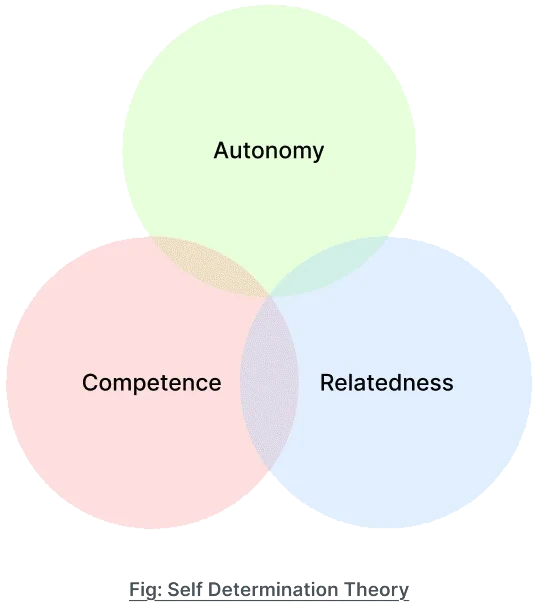
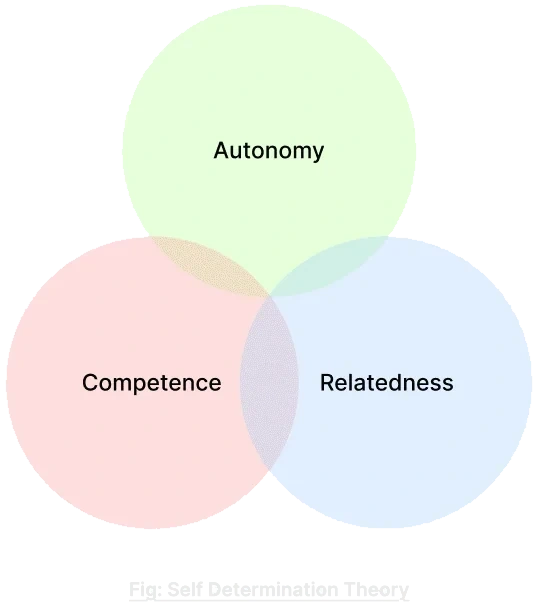
We decided to go with gamification as our core strategy to boost engagement because it taps into what truly motivates people—things like competition, achievement, and feeling part of a community. Drawing from Self-Determination Theory (SDT), we knew that to make the app compelling, we had to meet tenants’ needs for competence, autonomy, and relatedness. By adding challenges and progression, we made users feel competent; by offering personalised goals, we gave them autonomy; and by integrating social features like leaderboards and group challenges, we built a sense of belonging.
This choice was also influenced by what we've seen work in other areas—whether it's education or online communities, gamification has consistently led to better engagement. Our goal wasn't just about getting tenants to use the app more frequently but about making each interaction rewarding and fun. Gamification helped us move from a purely functional app to one that tenants genuinely enjoy coming back to—a tool that’s not only useful but also adds a bit of fun and connection to their everyday routines.
05User Persona
User Personas
To ensure we designed gamification features that resonated well with our tenants, we conducted a survey (to find gamification persona of our user base) to segment our users into six different persona types using the HEXAD framework.
This helped us not just to understand their motivations, but also to tailor features accordingly to their pain points, ultimately fostering greater engagement and user satisfaction
The survey indicated that users were more likely to engage if they felt they could contribute to a community or achieve personal milestones. There was also a clear preference for tangible rewards, such as discounts or vouchers.
Achievers
These users are driven by a sense of accomplishment and are motivated by challenges and goals. They enjoy achieving milestones and unlocking rewards.
Users in the app
20% of respondents identified themselves as primarily motivated by challenges and accomplishments.
Pain Point
Lack of clear goals and milestones.
Socialisers
These users value interaction and community involvement. They are more likely to engage when features enable social interaction or provide community benefits.
Users in the app
25% were drawn towards social features, community engagement, and interaction.
Pain Point
Limited opportunities for interaction
Philanthropists
Motivated by a desire to help others, these users appreciate features that allow them to contribute positively to the community, such as sustainability initiatives.
Users in the app
10% were motivated by altruistic actions and community contributions.
Pain Point
Few features that allowed them to contribute to the community.
Free Spirits
These users enjoy exploring the app at their own pace without strict limitations. They appreciate features that offer flexibility and the freedom to discover content independently.
Users in the app
15% preferred exploring and discovering the app's content at their own pace.
Pain Point
A rigid app structure without exploratory features.
Players
Motivated by rewards, players seek tangible incentives like points, discounts, and badges. They thrive on a reward-driven experience that provides instant gratification.
Users in the app
20% showed strong motivation for earning rewards and tangible incentives.
Pain Point
Lack of sufficient tangible rewards and incentives
Disruptors
Disruptors are interested in challenging the status quo and making impactful changes. They enjoy features that allow them to voice opinions or contribute to innovative solutions.
Users in the app
10% were motivated by a desire to drive changes and challenge existing systems.
Pain Point
Few opportunities to voice opinions.
06Gamification elements
Finding gamification elements
The issues found during our root cause analysis session were crystallised into questions using the “how might we…” method.
6 HMWs
We explored 6 HMWs how to provide the correct set of elements for gamification that would drive engagement for all the personas while boosting our core goals.
Crazy-8s
Our way of trying to brainstorm these problems. We got out of the office together, folded a sheet of paper to make eight different sections, and sketched new ideas on each fold.
Marczewski’s User Type Reverse Analysis Tool
Using Marczewski’s User Type Reverse Analysis Tool and brainstorming techniques like Crazy 8s, we identified game elements that would appeal to each persona type. We then prioritised these elements based on their potential impact on engagement and ease of implementation.
07User flows
The Gamification Flows
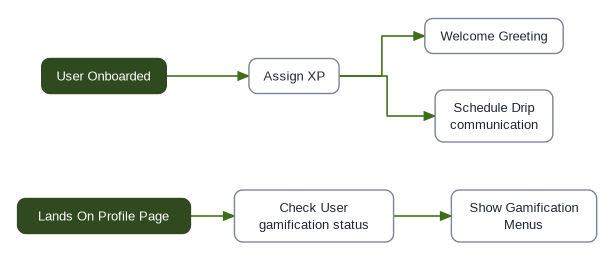
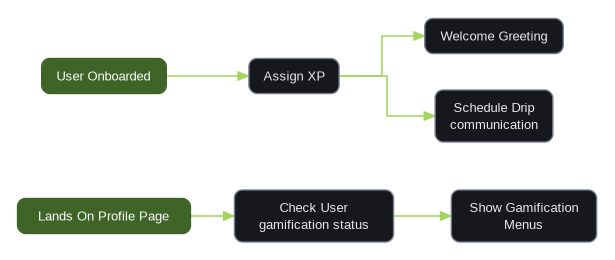
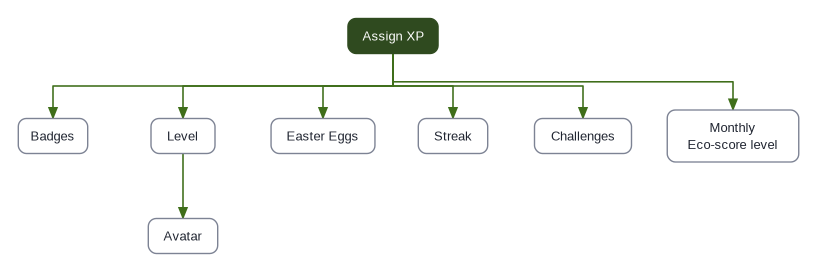
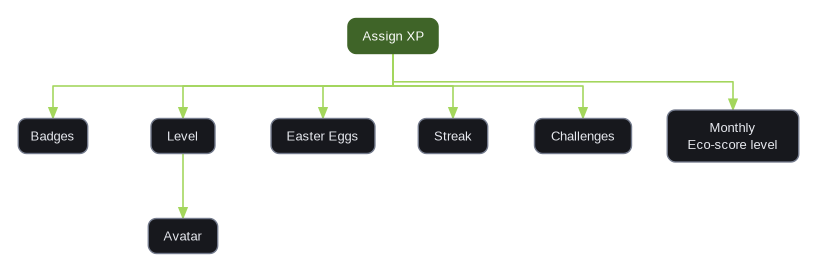
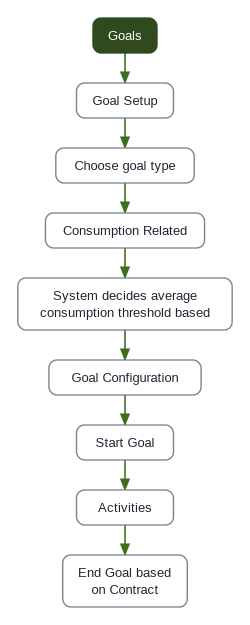
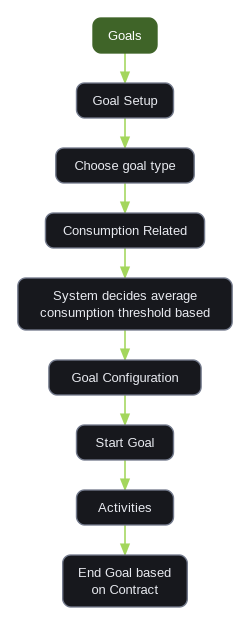
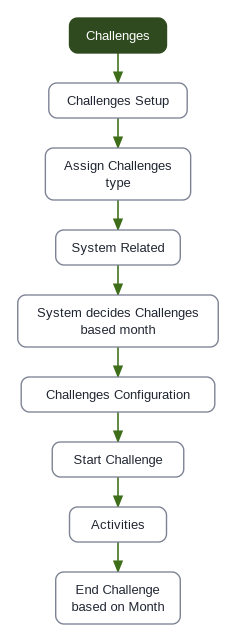
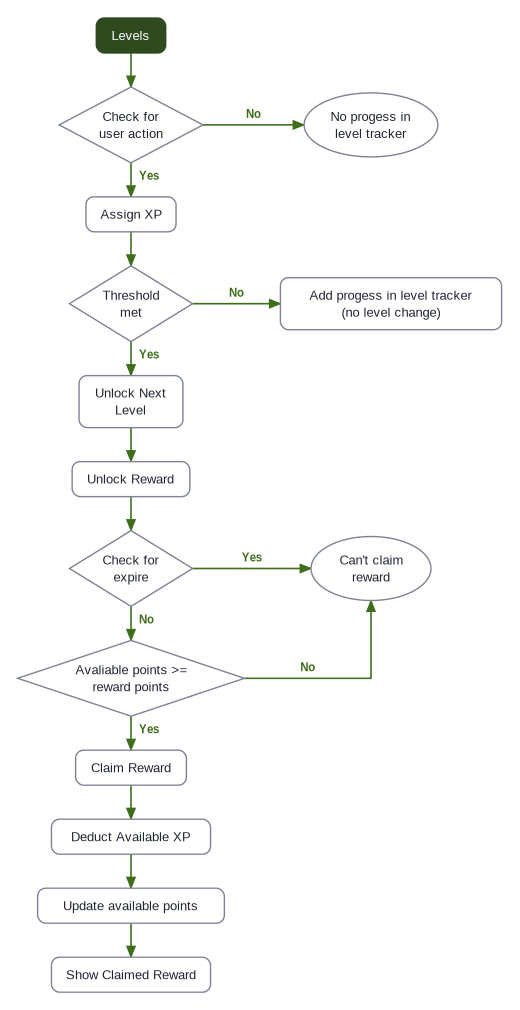
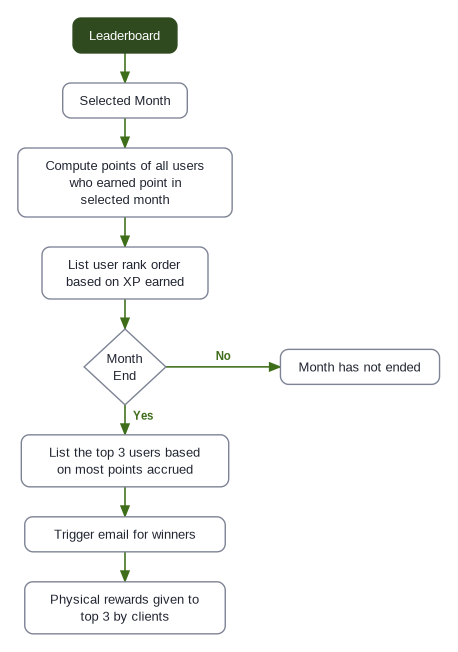
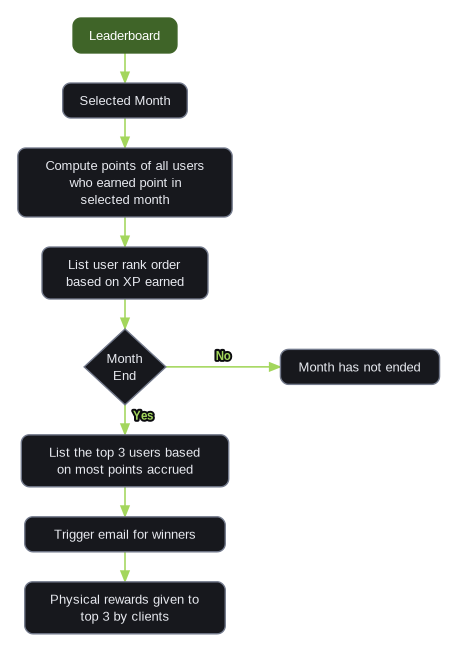
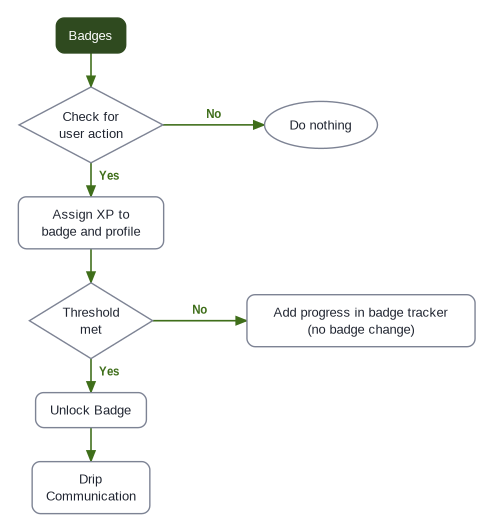
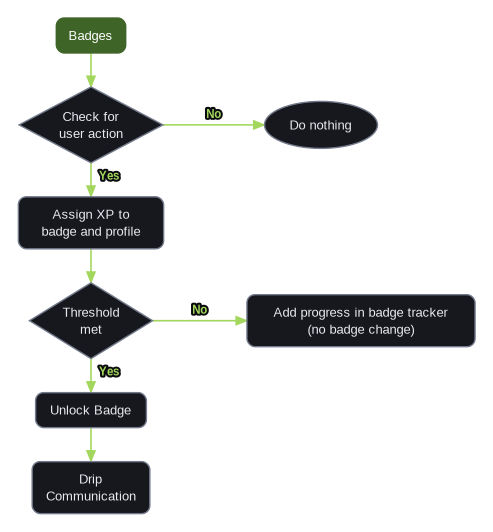
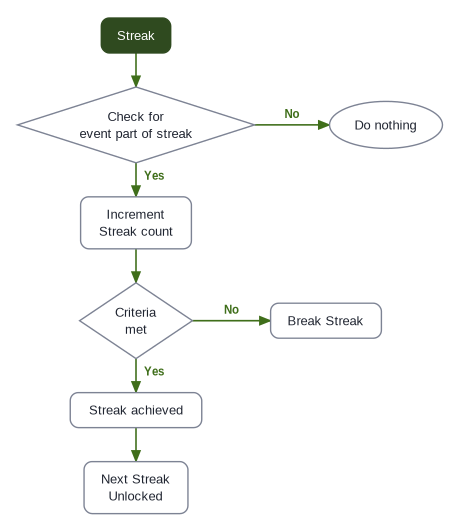
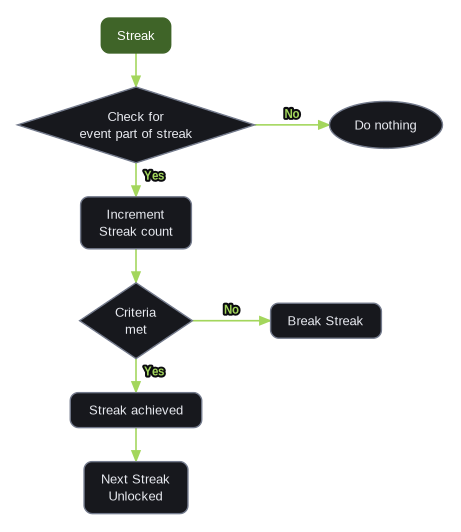
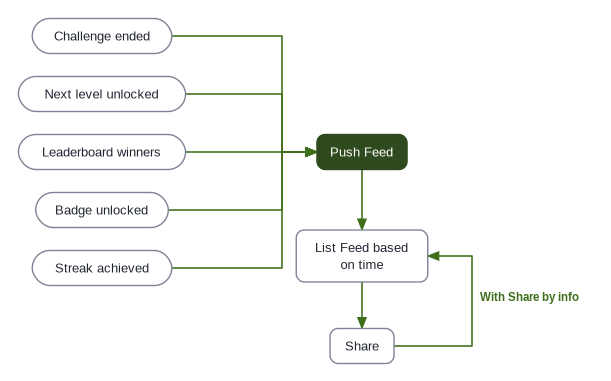
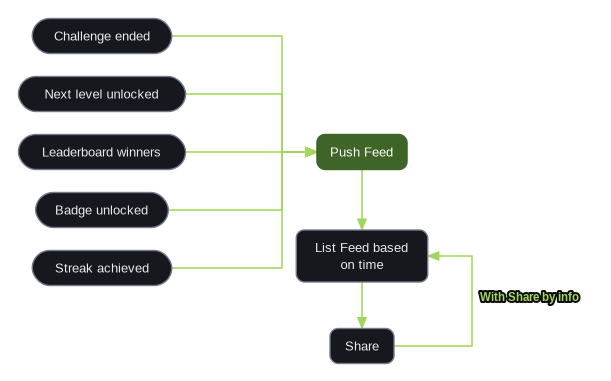
To ensure a seamless and intuitive experience for the users of our platform, we mapped the user journey of each gamification metric that would help users navigate effortlessly and quickly.
Global entities
Contract entities
Goals
Challenges
Levels and rewards
Leaderboard
Badges
Streak
Feed
08Wireframe and prototypes
Developing wireframe and prototypes
We developed wireframes and interactive prototypes to visualize how gamified features would be integrated. These prototypes were tested with select tenants, and iterative feedback was used to enhance usability, engagement flows, and overall user experience.
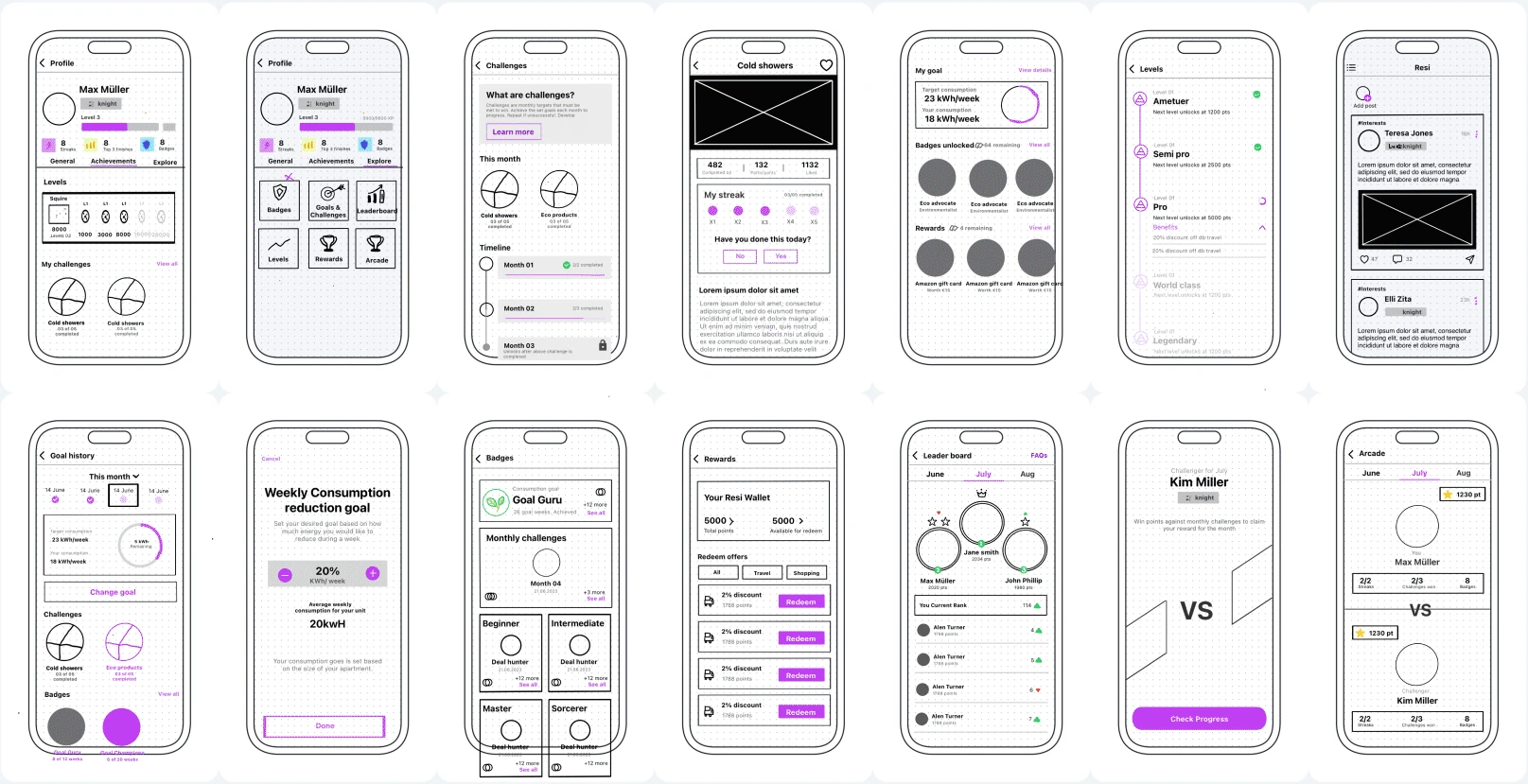
Swipe sideways to exploreOpen full size
Iterations after Prototype testing
During the prototype testing phase, several concrete pain points emerged based on tenant feedback. These issues were directly related to the usability, navigation, and user experience of the prototype. Below are the key problems identified along with the corresponding iterations:
| Pain points | Description | Iterations |
|---|---|---|
| Complex Onboarding Flow | Tenants expressed frustration with the onboarding flow, which required them to navigate multiple screens and understand various features without sufficient guidance. This led to a high dropout rate. | We simplified onboarding by breaking it down into a guided walkthrough, focusing on one feature at a time, and providing interactive tooltips. Additionally, onboarding tasks were reduced to make the first interaction lighter and more engaging. |
| Confusing Navigation for Gamified Features | Users found it challenging to locate and participate in challenges due to an unclear menu layout and poorly labeled sections. | We redesigned the navigation structure, consolidating all gamified elements under a single "Engage" tab. This made it more intuitive to find and participate in challenges, reducing user confusion. |
| Lack of Visual Feedback | During interactions, users reported a lack of visual feedback, such as progress bars or achievement notifications, which left them uncertain whether their actions were successful. | We implemented dynamic visual feedback, such as progress bars for ongoing challenges and pop-up notifications for completed milestones. This provided instant acknowledgment and helped users understand their progress. |
| Low Participation in Community Features | Tenants were reluctant to use community features like discussion boards, stating that they didn’t feel encouraged or rewarded for participating. | We added reward points for community interactions, such as posting on discussion boards or participating in events, which could be redeemed for tangible benefits like gift cards. We also added visible contribution badges to recognize active users. |
| Overwhelming Information During Onboarding | Tenants noted feeling overwhelmed with too much information during their first use of the app, making it hard to understand the value of each feature. | We reorganized the onboarding experience to focus only on essential features first. Secondary features were introduced gradually through targeted prompts once users had familiarized themselves with the basics. |
| Difficulty Understanding Rewards and Progress | Many users didn’t understand how to earn rewards or what specific actions contributed to their progress. This led to frustration and disengagement. | We clarified the reward structure by adding a dedicated "Rewards" page that outlined how points were earned and how they could be redeemed. Progress bars were also added to each challenge to visually track milestones. |
| Low Visibility of Active Challenges | Active challenges were hard to find, leading to users struggling to discover new challenges to take on | We introduced a widget on the home screen that highlighted ongoing challenges, making them instantly visible upon app launch. This encouraged tenants to engage right from the start. |
Complex Onboarding Flow
Description
Tenants expressed frustration with the onboarding flow, which required them to navigate multiple screens and understand various features without sufficient guidance. This led to a high dropout rate.
Iterations
We simplified onboarding by breaking it down into a guided walkthrough, focusing on one feature at a time, and providing interactive tooltips. Additionally, onboarding tasks were reduced to make the first interaction lighter and more engaging.
Confusing Navigation for Gamified Features
Description
Users found it challenging to locate and participate in challenges due to an unclear menu layout and poorly labeled sections.
Iterations
We redesigned the navigation structure, consolidating all gamified elements under a single "Engage" tab. This made it more intuitive to find and participate in challenges, reducing user confusion.
Lack of Visual Feedback
Description
During interactions, users reported a lack of visual feedback, such as progress bars or achievement notifications, which left them uncertain whether their actions were successful.
Iterations
We implemented dynamic visual feedback, such as progress bars for ongoing challenges and pop-up notifications for completed milestones. This provided instant acknowledgment and helped users understand their progress.
Low Participation in Community Features
Description
Tenants were reluctant to use community features like discussion boards, stating that they didn’t feel encouraged or rewarded for participating.
Iterations
We added reward points for community interactions, such as posting on discussion boards or participating in events, which could be redeemed for tangible benefits like gift cards. We also added visible contribution badges to recognize active users.
Overwhelming Information During Onboarding
Description
Tenants noted feeling overwhelmed with too much information during their first use of the app, making it hard to understand the value of each feature.
Iterations
We reorganized the onboarding experience to focus only on essential features first. Secondary features were introduced gradually through targeted prompts once users had familiarized themselves with the basics.
Difficulty Understanding Rewards and Progress
Description
Many users didn’t understand how to earn rewards or what specific actions contributed to their progress. This led to frustration and disengagement.
Iterations
We clarified the reward structure by adding a dedicated "Rewards" page that outlined how points were earned and how they could be redeemed. Progress bars were also added to each challenge to visually track milestones.
Low Visibility of Active Challenges
Description
Active challenges were hard to find, leading to users struggling to discover new challenges to take on
Iterations
We introduced a widget on the home screen that highlighted ongoing challenges, making them instantly visible upon app launch. This encouraged tenants to engage right from the start.
09Components
The Gamification Components
The redesign process of the product’s visuals and features involved utilising the basic brand guidelines, which includes colours, fonts, and illustration styles that already established in the design system.
We’re all added new components into the existing set of components in the design system that bolstered the brand identity and create a unified look.
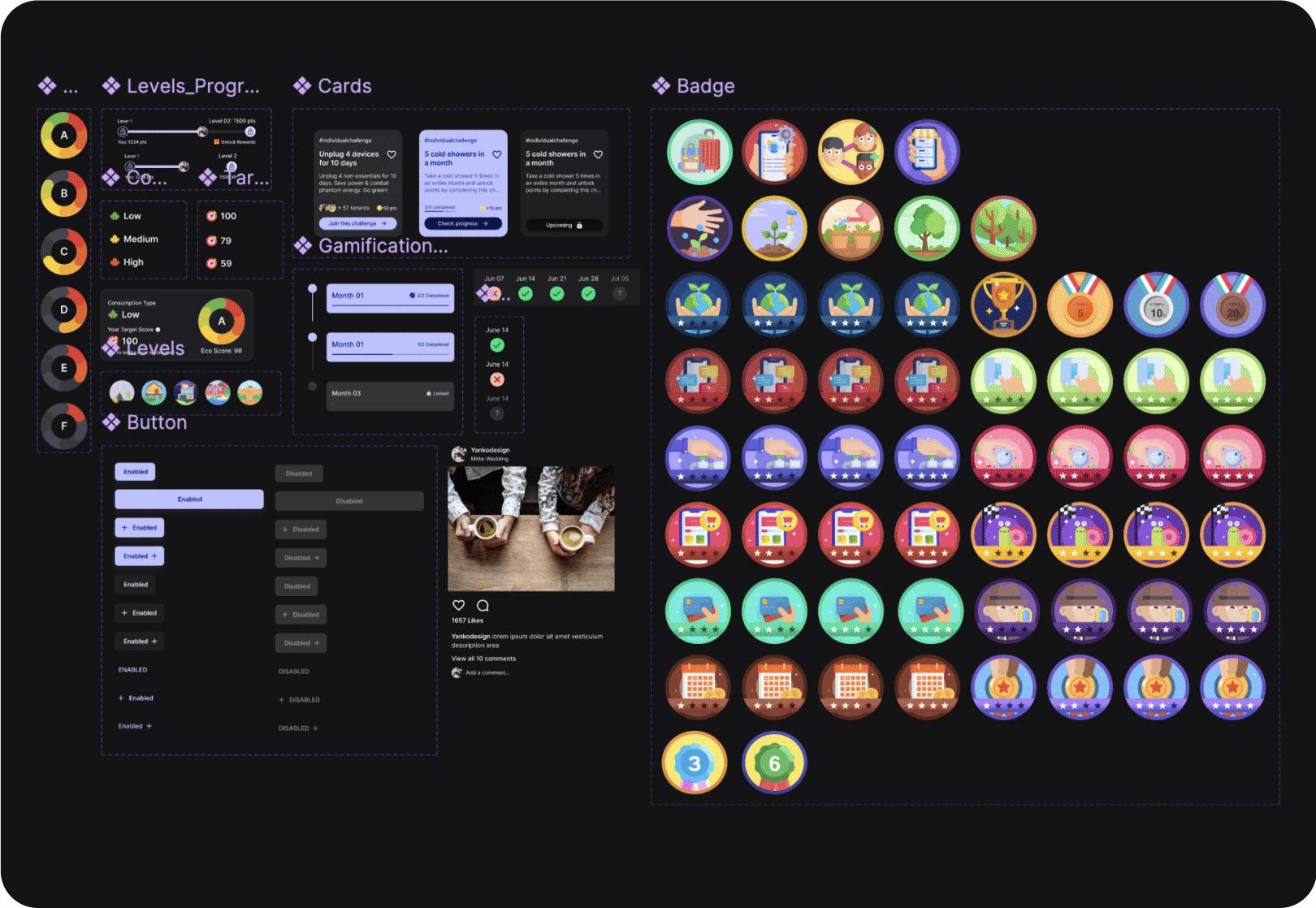
Swipe sideways to exploreOpen full size
Some Gamification Elements
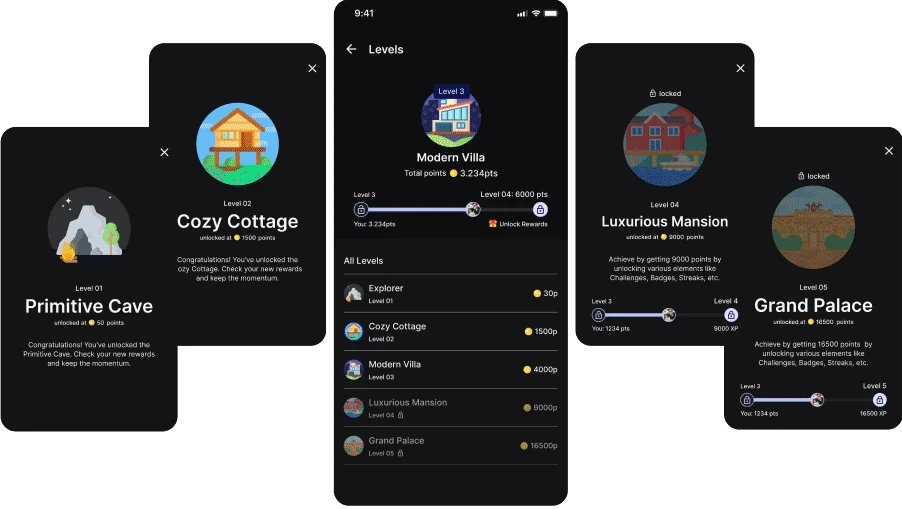
Game Levels
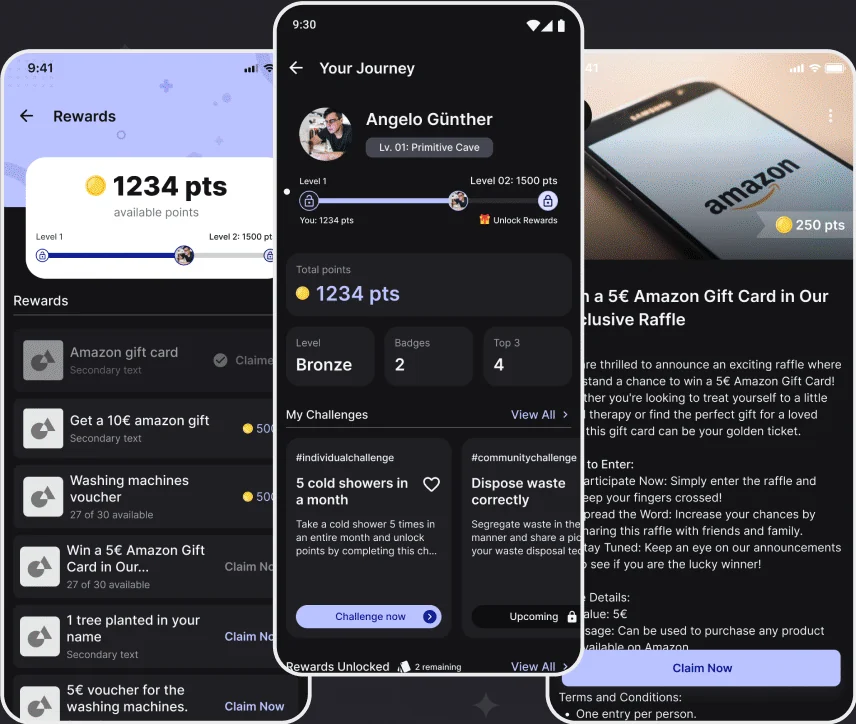
Mechanism: Game levels guided users on a journey from beginner to expert, using experience points (XP) earned through everyday actions like energy-saving or challenge participation.
Types: Users started at a Primitive Cave and could level up to a Cozy Cottage, then onward to a Luxurious Mansion, and eventually to a Grand Palace.
Progression: To move up, users had to collect XP through regular engagement. With each level, they unlocked new rewards and features, making the journey feel rewarding and visually stimulating.
Badges
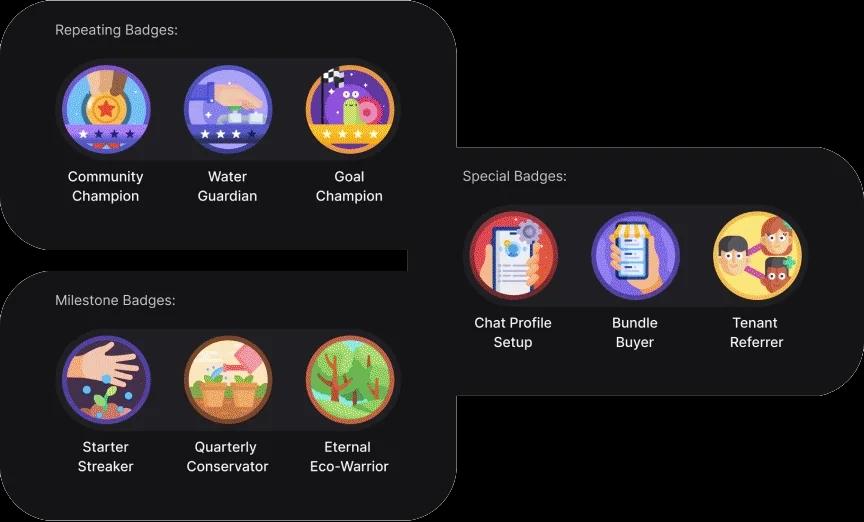
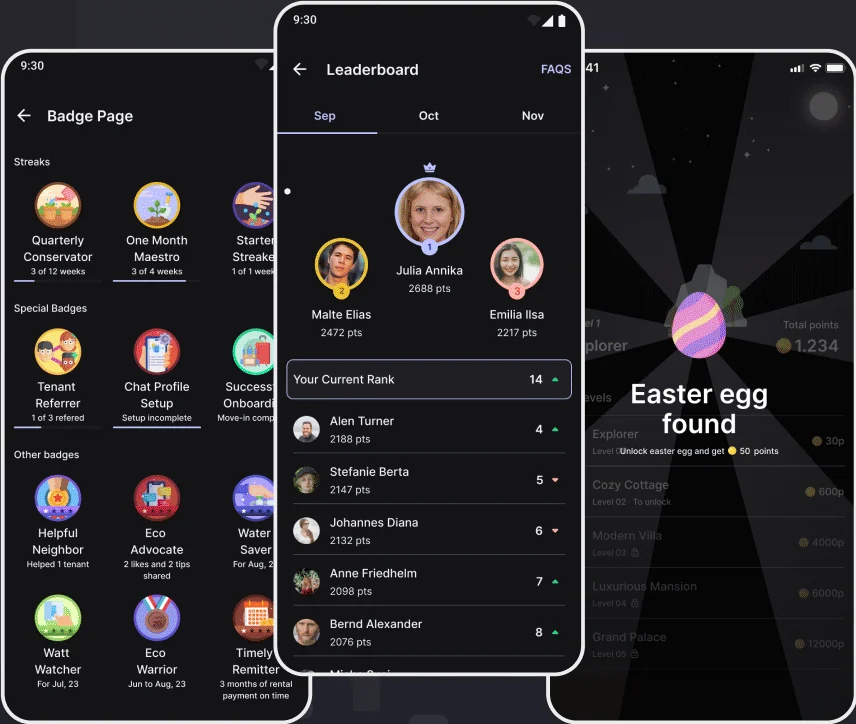
Mechanism: Badges served as visual milestones celebrating users’ achievements and consistent behaviours.
Types: There were Repeating Badges for hitting goals repeatedly, Special Badges for exceptional feats, and Milestone Badges for long-term achievements, like six months of energy-saving consistency.
Progression: Users earned badges by meeting targets, such as energy reduction over weeks or participating in community activities. Progressing meant upgrading badges, like going from 1 star to 4 stars as users kept hitting the same achievements.
Streaks
Mechanism: Streaks reward consistency, highlighting each week a tenant stays within their energy goal.
Types: Streaks tied to a weekly consumption limit set by the tenant, and streaks shown alongside the Eco-Score on the home screen.
Progression: Every consecutive week extends the streak and unlocks the next one. Missing a week breaks it, nudging tenants to build a lasting habit.
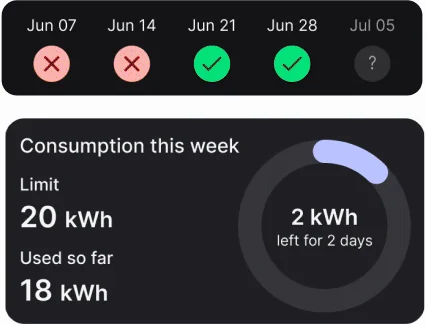
Streaks with Goal Settings
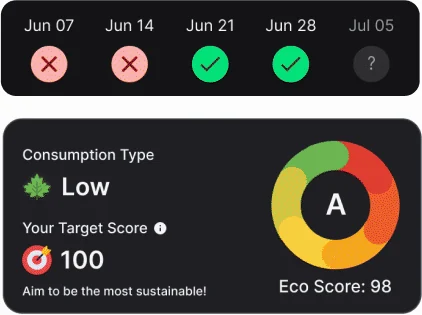
Streaks with Eco-Score on Home Screen
10Main Features
Home & Consumption screens
We revamped the home screen to introduce an 'eco-score,' which rated tenants from A to F based on their consumption compared to others. Individual scores for electricity, water, and heating also motivate better usage habits. Streaks were added to highlight when tenants met their goals, while quick challenge cards on the home screen made energy-saving activities more engaging. On the report page, tenants could see how many trees are needed to offset their energy consumption, adding a meaningful visual impact.
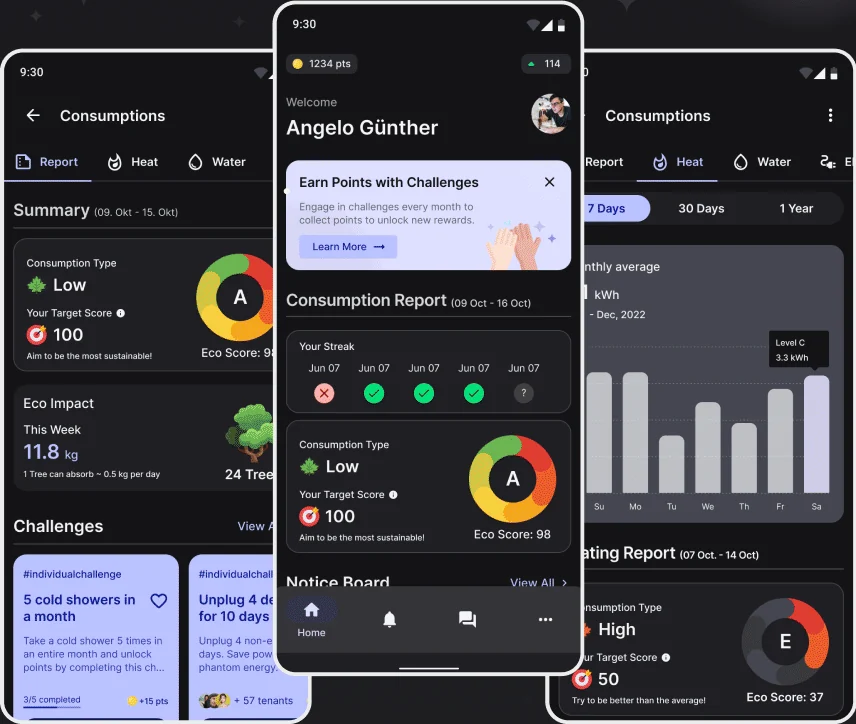
Community Challenges
Tenants participate in building-wide challenges, fostering a sense of community through collective goals, such as recycling initiatives or charity events.
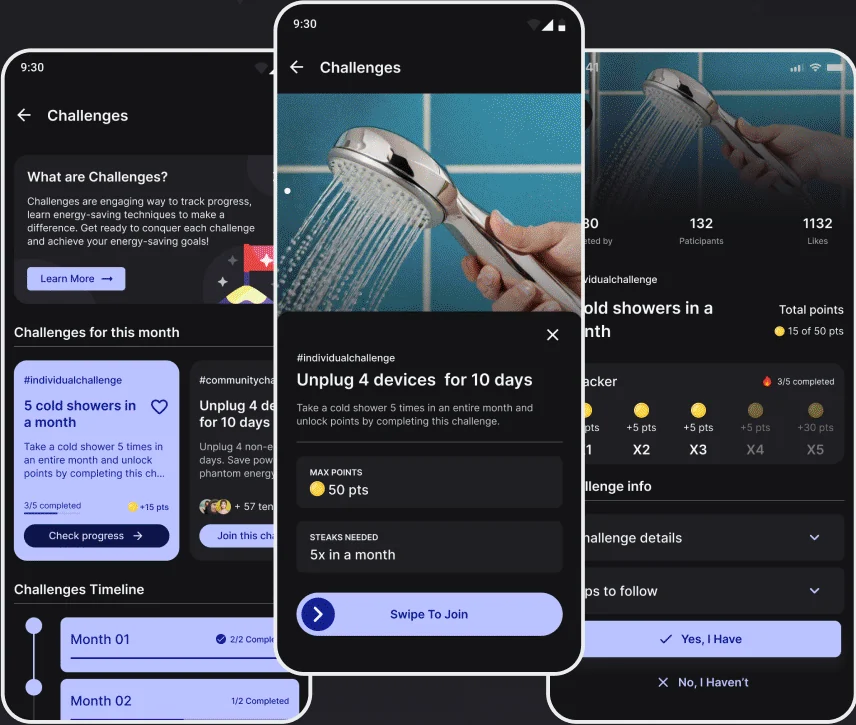
Personalised Rewards
The users were incentivised to unlock new levels to reach rewards. These were tailored to individual tenant behaviour, offering incentives like discounts, badges, and local partnerships based on engagement patterns.
Engagement & Community Elements
We introduced various fun elements such as leaderboards, Easter eggs, and badges. Leaderboards fostered healthy competition, Easter eggs offered surprise rewards, and badges recognised achievements, making the tenant experience more interactive and enjoyable.
11Strategies
Solution & Strategy to Drive Engagement
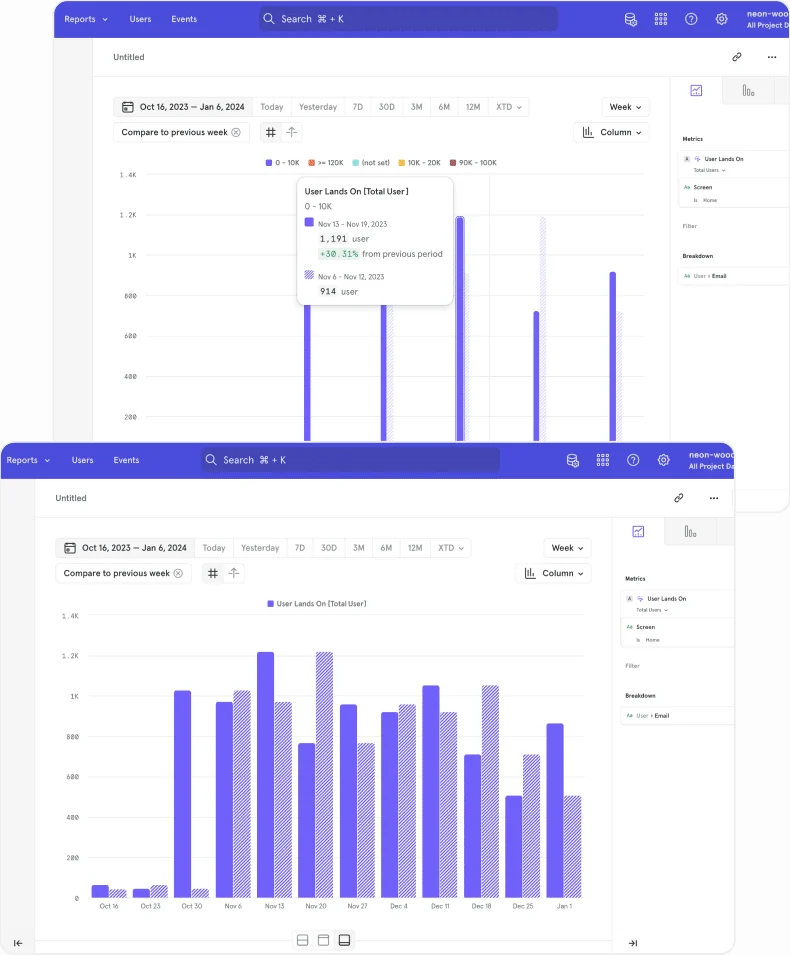
Our strategy involved continuously refining the engagement flows based on user feedback and engagement metrics. We utilized Mixpanel to track user behavior and iterated on features that showed lower engagement.
Multiple Engagement Flows for Testing
We tested multiple engagement flows using an A/B testing method:
- Flow A: Focused on individual rewards and achievement badges.
- Flow B: Emphasised community challenges and leaderboards.
Testing of the Strategy/Metrics
We conducted A/B tests to compare the different engagement flows and measured success using metrics such as the 7-day engagement rate, feature adoption, and user satisfaction.
User feedback from our awesome tenant community
Surveys conducted post-launch indicated several positive comments from tenants about the gamified features.

Basti Weber
24yrs, Male
I love the rewards system. It's motivating to get points for things I already do, like paying rent on time.

Boyan Lu
20yrs, Male
The challenges make using the app fun! I find myself logging in more often just to see my progress.

Emily Thompson
27yrs, Female
The leaderboard feature makes it really engaging, especially competing with neighbors—it adds a friendly challenge.

Hannah Glaser
19yrs, Female
The community challenges are great. I never thought I'd meet my neighbours through an app, but it’s happening now.

Liam Davis
27yrs, Male
The streak feature helps me keep track of my energy usage. It's great to know that I’m staying on target and won’t have surprises at the end of my contract.

Joshua Randria
23yrs, Male
The badges are such a nice touch. I feel accomplished when I see my badges add up over time.

Mark Johnson
34yrs, Male
Seeing my eco-score improve week after week makes me feel like I'm really contributing to something bigger.
12Outcomes
Outcomes
The outcomes of our gamification strategy clearly demonstrate the positive impact on tenant engagement, utility consumption, and community involvement. These results show that gamification not only increased user interaction but also contributed tangible financial benefits, making it a valuable addition to the property management experience.
01
Increased Engagement
02
Enhanced Feature Utilization
03
Utility Consumption Reduction
13Impact model
What the results are worth: an interactive model
The published savings came from one property. Change the inputs to see what the same engagement lift could mean for another.
Annual utility savings for the property
€95,270
€47 per apartment · ROI uplift of about 1.0×
- Savings from lower consumption€95,270
- App cost for the year€95,269
Defaults reproduce the published results: 2,027 apartments, a 9% reduction and about €47 saved per apartment. The app cost of €47 per apartment is implied by the reported ROI moving from 2.4× to 3.4× (savings equal to one extra year of cost); it is an inference, not a quoted price. Change the inputs to model another property.
14Conclusion and Next Steps
Conclusion
The introduction of gamification features in our tenant app successfully boosted user engagement and enhanced the overall user experience. By tapping into intrinsic motivations such as achievement, competition, and community, we were able to foster a more interactive and connected tenant environment. Moving forward, we plan to further refine these features, focusing on personalization and expanding the rewards system to cater to a broader range of tenant interests.
Next Steps
Personalised Challenges: Develop AI-driven challenges that cater to individual tenant preferences, further enhancing the personalized experience.
Community Events: Expand the scope of community-driven quests to involve more real-life interactions, such as building-wide events or eco-friendly initiatives.
Continuous Feedback Loop: Maintain regular surveys and focus groups to keep refining the gamified elements based on tenant needs and preferences.